
Chemotherapy treatment
Find out about chemotherapy treatment, how it works, how long it takes and what side effects you might experience.
You are viewing: How does chemotherapy work?
- Chemotherapy, or chemo, is a type of cancer treatment
- Chemotherapy treatment is very common and uses drugs to kill off the cells that cause cancer
- It’s given in cycles, with breaks in between
- The length of time you’ll need chemotherapy for will depend on the type of cancer you have and the stage it’s at.
What is chemotherapy?
Cancer cells divide fast, and then small cells can break off into your bloodstream. That’s how cancer spreads in your body.
Chemotherapy, or chemo, is one of the most common cancer treatments. It uses drugs to kill off the cells that cause cancer. You might also see/hear chemo being called systemic anti-cancer therapy (SACT).
Chemotherapy works by attacking and destroying fast-dividing cells, including cancer cells. But chemo also attacks some healthy fast-dividing cells, like hair cells and the cells that line your mouth and stomach. This is why your hair might fall out and you might experience other side effects.
How does chemotherapy treatment work?
Chemotherapy is a drug treatment.
The drugs are given in several sessions with rest in between, these are called cycles. There’ll be a set time where you have the drug treatment and then a set time where you don’t, before the process is repeated.
The time in between drug treatments helps your body to recover from the effects of the chemotherapy, but is short enough to make sure the cancer cells don’t start to grow again.
Chemotherapy can be used on its own to treat cancer and eventually cure it. It’s also used alongside other treatments, like radiotherapy and surgery.
It can be used before surgery to kill cancer cells and shrink a tumour, or after surgery to stop cancer coming back.
And it can be used to relieve symptoms and help you feel better if your cancer is very advanced.
How will I be given chemotherapy?
There are various different ways you can have chemo. The most common way is straight into your bloodstream. This is also called ‘intravenously’ and this might be done with an injection, an IV drip or using a device like a PICC line.
A PICC line is a long, soft, thin tube inserted under the skin to deliver medication straight to your bloodstream. You might also have chemo as tablets.
If you’re worried about the way you might have your chemo you should talk to your care team to see if there are other options or ways they can support you.
What drugs are used in chemotherapy treatment?
There are lots of different chemotherapy drugs, and your doctors will recommend the best ones for you.
You might be given one drug or a combination, depending on the type of cancer you have.
What are the side effects of chemotherapy?
Some of the most common side effects of chemotherapy include:
- hair loss
- sore mouth or ulcers
- weakened immune system (making it easier to pick up infections and harder to get rid of them)
- appetite changes
- changes to sense of taste
- weight changes
- trouble concentrating or ‘brain fog’
- feeling and being sick
- fatigue
- constipation
- diarrhoea
Find out more about side effects of chemotherapy you might experience, what might help you to feel better, and who can support you.
How long does chemotherapy take?
The length of your chemotherapy treatment will depend on the type of cancer you have and the drugs you take.
It might involve daily, weekly or monthly treatment.
This might feel really daunting when you’re first told you need chemotherapy. There aren’t any silly questions, so you can always ask your consultant or care team.
Common questions about chemotherapy
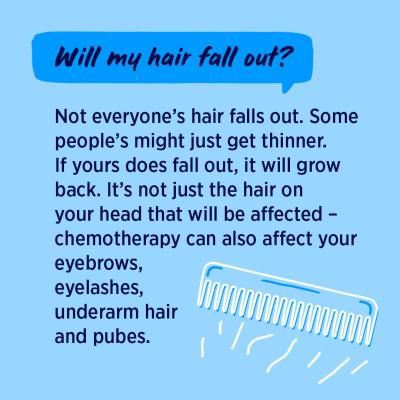
Will my hair fall out?
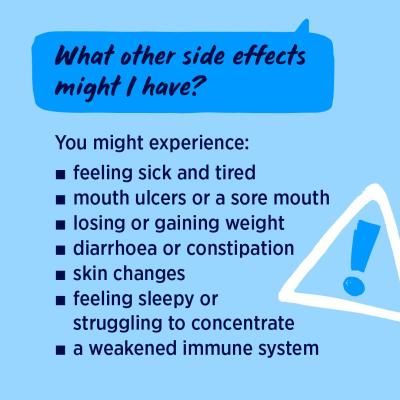
What other side effects might I have?
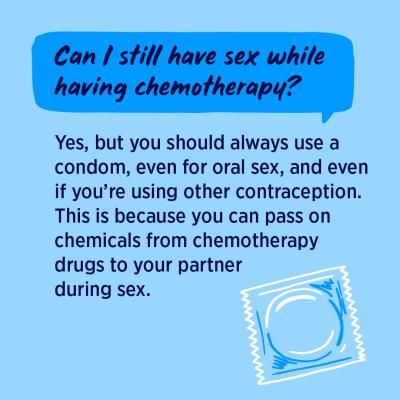
Can I still have sex whilst having chemotherapy
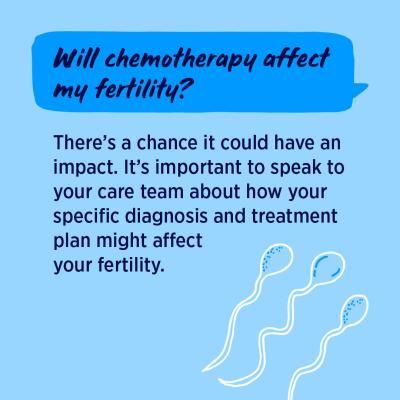
Will chemotherapy effect my fertility?
Will chemotherapy be difficult?
Questions to ask about chemotherapy
Cancer and cancer treatment can be confusing. So never be afraid to ask questions. And if you don’t understand the answers you get, keep asking until you do. If your doctor recommends chemotherapy, you might like to ask some of the questions below:
- Why is chemotherapy the best option? What are the benefits?
- How long is my chemotherapy likely to last?
- How will I be given chemotherapy?
- Where will I be given it?
- What are side effects of chemotherapy, and how can we reduce them?
- What will chemotherapy achieve?
- How effective is it likely to be?
- Could any other treatments work?
This page was reviewed in June 2024. It will reviewed again in June 2027.
Tips and resources
PIF TICK accredited information
The Patient Information Forum is the UK membership organisation and network for people working in health information and support. The PIF TICK is the UK-wide Quality Mark for Health Information.