
Dear Andy… an open letter to the new Prime Minister from young people with cancer
As Andy Burnham takes office as the UK’s new Prime Minister, young people supported by Teenage Cancer Trust have written to the PM to invite him to find out more about their lives. From their experience of diagnosis to how several of the group had their lives saved by clinical trials, the letter shares what it’s like to be a young person with cancer in the UK.
- Published:
- Category:
- Policy Policy and campaigns
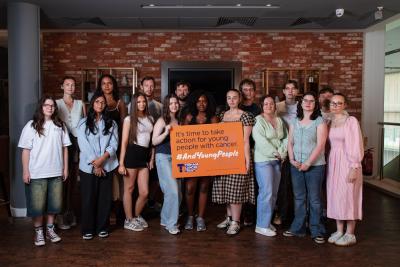
Dear Prime Minister,
We are Teenage Cancer Trust’s Youth Advisory Group (YAG), a group of young people from across the UK who have experienced cancer. We would like to invite you to meet with us, to learn more about what it’s like to have cancer as a young person.
As members of YAG, we share our experiences, provide feedback and challenge perspectives to help drive positive changes for young people with cancer. Through our lived experience, we advocate for those who are currently going through treatment and for future generations who will face cancer. We are proud to be a guiding voice within Teenage Cancer Trust, helping to ensure that young people’s experiences shape services, support and policy.
For many of us, Teenage Cancer Trust has been a lifeline. Cancer can be an incredibly isolating experience as a young person, making you feel different from your peers at a time when connection and belonging matter most. Through Teenage Cancer Trust, we found people who understood what we were going through because they had lived it too.
The charity has provided more than support; it gave us safety, friendship, advocacy and a sense of family. It connected us with other young people facing similar challenges through groups, events and specialist youth support coordinator roles. For many of us, our experience of cancer would have been very different without Teenage Cancer Trust by our side.
We welcome the publication of the National Cancer Plan for England and the inclusion of a dedicated chapter on children, teenagers and young adults. This is an important milestone and a recognition that young people with cancer require age-appropriate care, support and treatment pathways. However, now is the time to turn commitments into action.
There are three areas in particular where we believe change is urgently needed.
Faster diagnosis
Young people can and do get cancer, yet too many experience delays before their diagnosis is taken seriously. Those delays can have a lasting impact on both physical and mental health.
Faster diagnosis means better outcomes, earlier access to treatment and, in many cases, improved chances of survival. It reduces the time spent in uncertainty and fear, waiting for answers while symptoms worsen. Being listened to and believed matters. Too often, young people feel dismissed or unheard, leaving them feeling as though they are “going crazy” when they know something is wrong.
Quite simply, no young person should have to spend unnecessary time in limbo waiting for answers.
Specialist psychological support
Cancer affects far more than physical health. Being diagnosed with cancer as a teenager or young adult can make you feel like your life has been put on pause while everyone else’s carries on.
Young people with cancer face unique challenges at a critical stage of life. We miss important milestones, opportunities and experiences that our peers take for granted. We are often trying to balance growing independence with the realities of a life-changing diagnosis.
That’s why specialist psychological support is vital, because young people need professionals who understand these unique experiences. Support must be age-appropriate, culturally sensitive and consistently available across the country.
Many young people may not realise they need psychological support immediately after diagnosis, but the long-term impact often becomes clear later.
We do not want pity. We want understanding, practical support and access to people who recognise the specific challenges of having cancer as a young person.
Access to clinical trials
Accessing clinical trials can be life-changing, and for some of us, lifesaving.
Several members of our group are alive today because they were able to access a clinical trial. For others, trials represented a final treatment option when other approaches had been exhausted. Clinical trials not only offer hope to individual patients but also improve outcomes for future generations through research and innovation.
However, access remains unequal. Age-based eligibility criteria do not always reflect the realities of teenage and young adult cancers. Practical barriers, including travel and financial costs, can also prevent participation.
Young people deserve access to the best and most innovative treatments available. Access should not be a barrier to hope; it should be an opportunity available to everyone who could benefit.
The need for change has never been more urgent. Young people’s voices must be heard now. Delays in action have real consequences for lives, wellbeing and futures.
We need to be heard, now.
The need for change has never been more urgent. Young people’s voices must be heard now. Delays in action have real consequences for lives, wellbeing and futures. Every year that passes without improvement means more young people facing avoidable challenges and inequalities in care.
Young people deserve tailored cancer care, equal opportunities for treatment and support, and a healthcare system that recognises us. We must not lose the momentum created by the National Cancer Plan. As many of us would say: yesterday was the best time to act. The second best time is now.
As Prime Minister, we ask you to commit to listening to and working alongside young people affected by cancer. Effective policy must be genuinely co-produced with the people it affects.
Invitation to meet with us
We would welcome the opportunity to visit Westminster and meet with you. We would also be delighted to host you on a Teenage Cancer Trust unit so that you can see first-hand the realities of cancer care for young people. Together, these experiences would provide valuable insight into both the challenges young people face and the support that makes a difference.
We want to help you understand what it is really like to be diagnosed with cancer as a young person, to undergo treatment while trying to navigate education, work and relationships, and to live with the long-term impact of cancer. Through sharing our experiences, we can help ensure that young people remain at the heart of decisions about their care.
Thank you for taking the time to read our letter. We hope to have the opportunity to meet with you and discuss how we can work together to improve outcomes and experiences for young people with cancer.
Best wishes,
Youth Advisory Group, Teenage Cancer Trust