
Mental impact of body image issues on teenagers and young people with cancer ‘overlooked’
New research* released 9th September 2025, reveals that over half (56%) of young people with experience of cancer struggle to accept changes to their appearance caused by the disease and its treatment.
In addition, over a quarter (29%) of those surveyed said that during cancer treatment they didn’t receive information or support with related body image or self-esteem issues, even though this would have been helpful.
- Published:
Teenage Cancer Trust warn that changes to appearance caused by cancer and treatment, for example hair loss, weight changes and scarring can cause significant psychological distress that is often overlooked.
In response, the charity today launches a new phase of its #StillMe campaign that shines a light on the issue - with young people across the UK that the charity has supported speaking out about their experiences in a bid to help others – and sharing their tips on how to cope.
One of those taking part is Jude Solley, 20, from East Sussex, who was diagnosed with leukaemia aged 16.
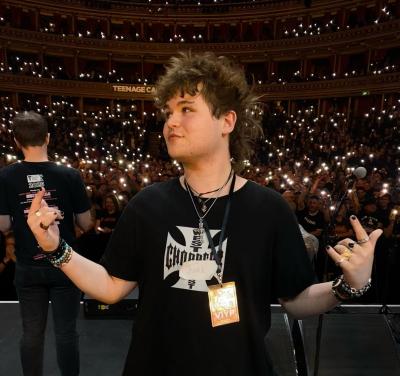
Jude said: “Every day I found myself looking a different person in the mirror and it got to the point where I couldn’t look at myself at all. I didn’t want to leave the house much, and I’d freak out if anyone tried to take a picture of me.
“Being on steroids made me gain a lot of weight and I was very critical of myself. You are weighed at the hospital, and they told me that I was about 16 stone. I thought: ‘This weight needs to go’. I developed an eating disorder.
“The medical staff noticed that I’d dropping weight too quickly, about a stone a month, and they realised that something wasn’t right. I talked to my Teenage Cancer Trust nurse Julia about it and that helped, and she referred me for psychology. That helped me a lot.
“I was depressed and in a very dark place, it was a dangerous time, but I’m OK now.
“My advice to people with cancer who are struggling with body image issues is to try to remember that it’s only temporary - you’ll get back to normal. And if things are getting too much you need to ask for help.”

Gaby Maurice, 17, from Cambridgeshire, was 13, when a tumour grew in her jaw muscle and spread to her mouth. She endured nine cycles of chemotherapy with four different types of chemo, followed by surgery. However, she says losing her hair and coming to terms with scarring were some of the most difficult things she had to deal with.
Gaby said: “I used to have long blonde hair, and it was my comfort blanket. I was a real girlie girl, so losing it was a big deal. It made me feel insecure.
“I also have an indent in my face where the tumour was removed, and I have scars. I have struggled at times, and it has been difficult, but I’ve started to realise that it is ok.
“If anyone is struggling with how their scars look, I would say that it gets better, and the scars will fade. I’m now proud of mine as it shows what I have been through. I battled cancer and made it out the other side.”
Teenage Cancer Trust hope that advice, hints and tips from young people like Jude and Gaby plus new expert information shared at www.teenagecancertrust.org/stillme will help other people struggling with body issues, whatever their age.
Dr Louise Soanes, Chief Nurse, Teenage Cancer Trust, said: “When a young person is diagnosed with a life-threatening illness like cancer the focus is necessarily on treatment – but it’s important that young people get the emotional and psychological support that they need to cope too.
“We know that changes to appearance caused by cancer and treatment can have a huge impact on the mental health of young people – often causing anxiety or leading to a loss of confidence - and in some cases young people isolating themselves or hiding themselves away - yet this impact is often overlooked.
“We’re thankful to the young people involved in our campaign for helping us shine a light on just one of the issues affecting their mental health and believe them sharing their experiences and tips will make a positive difference.”
However, Dr Soanes says Teenage Cancer Trust believe more must be done to support young people with cancer psychologically, and added:
“The nurses and youth support teams we fund work tirelessly to support young people with cancer emotionally. However, for those who need it, access to specialist psychological treatment from trained mental health professionals is a postcode lottery, with many who need help going unsupported.
“We believe that in every UK nation, every teenage and young adult with cancer should be able to access expert psychological support from a trained psychologist from the point of diagnosis and for a minimum of two years post-treatment. Because no young person should be left to suffer alone.”
The research* released today was produced in partnership with The Children and Young People’s Cancer Association, Ellen MacArthur Cancer Trust, Teenage Cancer and Young Lives vs Cancer. The research, carried out by Dartington Service Design Lab. 577 people with experience of cancer as a young person participated in the survey between September and December 2023.