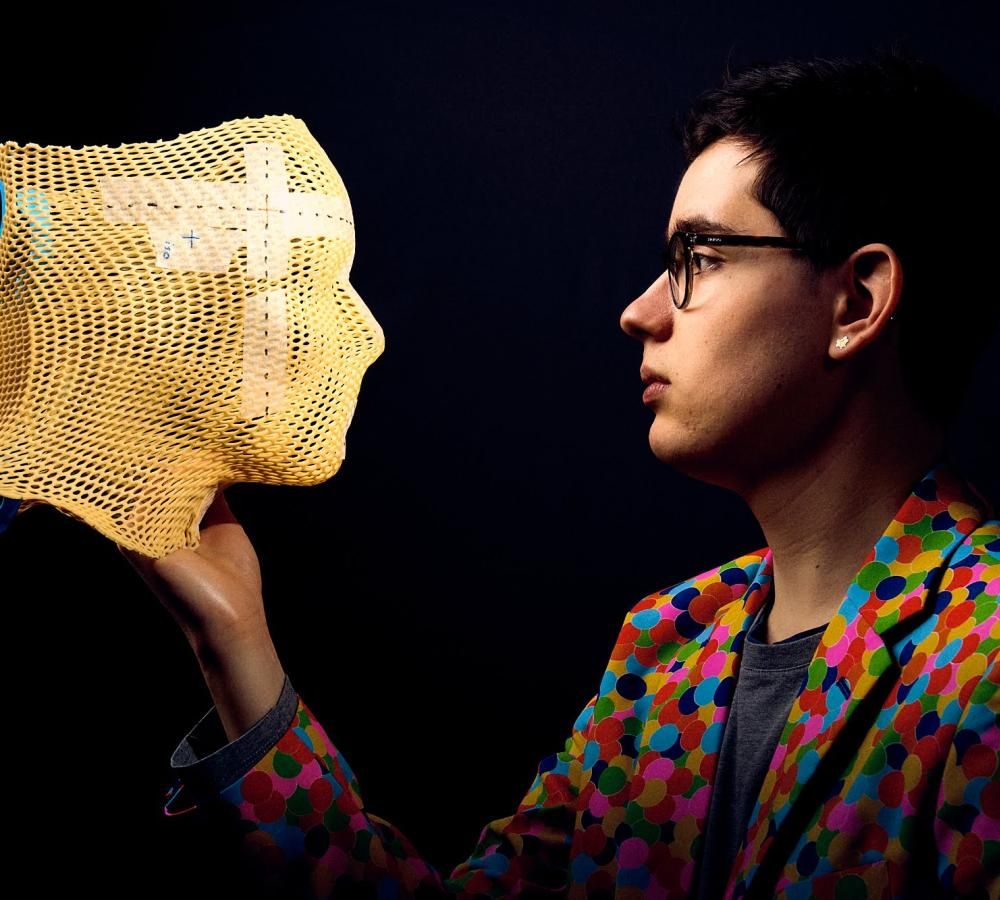
Brain tumours
Find out about the different types of brain tumour and central nervous system (CNS) tumours that can affect young people, symptoms to look out for, how brain tumours are diagnosed and what treatment is offered.
- There are many different kinds of brain and CNS tumour
- They can grow in the brain and spinal cord and are given a ‘grade’
- Brain tumours are usually diagnosed with a combination of neurological examinations, scans and a biopsy
- Surgery, chemotherapy and radiotherapy are the main treatments for brain tumours.
What are brain tumours?
There are lots of different types of brain tumours and CNS tumours, they can be in the brain and spinal cord. The spinal cord is the group of nerves that run from your brain down your back. It is surrounded by the bones in your spine.
Unlike other types of tumours, brain tumours rarely to spread to other parts of the body. Brain tumours are given a ‘grade’ between one and four. Grade one and two tumours are called ‘low grade’ and grade three and four tumours are called ‘high grade’.
Often brain tumours are named after the type of cell that they start from and where they are found. Knowing what type of brain tumour you have and its grade can help you to understand more about your diagnosis.
You can find out more about the different types of brain tumours and how ‘grading’ works on The Brain Tumour Charity website. If you have any questions about your own specific diagnosis you can always speak to your care team.
What are the symptoms of a brain tumour?
Common signs of a tumour in your brain can be:
- Feeling sick or drowsy
- Having fits
- Headaches
- Abnormal eye movements
- A stiff neck, tilted head or problems turning head that lasts for a number of weeks
- Needing to drink and go for a wee more often
- Problems with your vision, balance or coordination
- Problems with your emotions, behaviour or memory
- Problems with your growth and puberty, as the tumour can interfere with the levels of hormones in your body.
- Problems thinking such as concentrating, learning and making decisions.
- Problems speaking
- Not being able to taste or smell
Common signs of a tumour in your spinal cord can be:
- Pain, weakness, numbness or strange sensations in your arms or legs
- Problems going to the toilet
- If you have a penis it might make it tricky to get an erection, too.
If you’re between 13-18 you can find out more about symptoms here, if you’re over 18 you can find more information here.
If you have any of these symptoms, you should always get them checked out. There are lots of other things which could cause them, other than cancer, but it’s always best to check.
How are brain tumours diagnosed?
If your doctor thinks you might have a brain or spinal tumour, you’ll have different tests to check your nervous system. The nervous system is a network of nerves. The brain uses these nerves to co-ordinate your body.
A specialist doctor may do a neurological examination where they will talk to you about your symptoms, as well as check your speech, hearing, balance, movement and reflexes.
You may also have an eye test.
There are two main scans that are used to diagnose a brain tumour, MRI and CT scans. These scans are used to build up a 3D image of your brain or spinal cord.
PET scans, SPECT scans, MRI, blood tests and X-rays are all used to find out more about tumours.
A biopsy can also be used to take cells from a tumour so they can be looked at closely under a microscope for signs of cancer. This is also how they will work out the grading of your tumour which helps doctors to understand what the best treatment for you would be. You’ll be given an anaesthetic if you have a biopsy so you won’t feel anything.
Find out more about how brain tumours are diagnosed on The Brain Tumour Charity website.
You can find out more in our Getting diagnosed section.
How are brain tumours treated?
Surgery, chemotherapy and radiotherapy are the main treatments for brain tumours.
Surgery can be used to remove all or part of a tumour – if it’s possible to do that without damaging your brain.
Radiotherapy and chemotherapy can be used to remove a tumour and surrounding cells if surgery isn’t an option, or to treat cancer cells left behind after surgery.
Sometimes all three are used, together or separately.
Steroids also are often used to help to manage the symptoms of a brain tumour.
The Brain Tumour Charity have more information about specific treatments for brain tumours here.
Find out more about cancer treatments.
This page was reviewed in August 2026. It will reviewed again in August 2029.
What support is available to me if I have a brain tumour?
The Brain Tumour Charity
The Brain Tumour Charity is the world’s leading brain tumour charity and the largest dedicated funder of research into brain tumours globally. We offer a wide range of inclusive and accessible services for anyone affected by a brain tumour diagnosis.
We have information on tumour types, treatments, side-effects and tips on managing daily life on our website.
Whether it’s by phone, email or live chat, we’re here to listen, support you and help find any information you need. Find out more here.
We have dedicated services: