
How music helps young people get through cancer
At Teenage Cancer Trust, music means more than simply our fundraising gigs at the Royal Albert Hall. For young people on our units, it’s everything from an easy way to socialise with others in the same situation to a vital tool to help them through their cancer journey.
‘Music helped me push myself to start chemo’
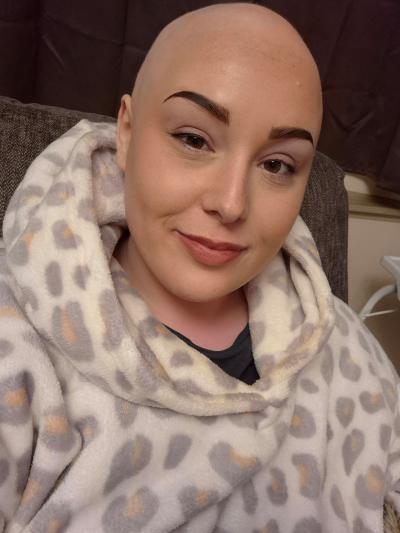
Kelly Underwood was 24 when she was diagnosed with Hodgkins lymphoma. She went to the doctors six times before she was diagnosed and says she “wasn’t listened to” when she first sought help. She was treated on the Teenage Cancer Trust unit at Queen Elizabeth Hospital Birmingham.
She said: “I used to play the guitar and write songs and there’s a guitar in the kitchen at the unit I was on, so I’d sit in the kitchen window seat and play the guitar in the hospital.
“It also helped having that space when people came to visit me as it was more cheerful. The unit is exactly what a young person needs.”
When asked why music was important to her during her treatment, Kelly said: “At first it’s like I forgot who I was and what music I liked, I couldn’t bring myself to listen to anything. Then I discovered a jukebox in the teenagers’ kitchen in hospital and found myself listening to things that felt powerful. It helped me push myself to start my chemo listening to powerful music. It was a constant reminder that I could do this.”
“Music helped me most on chemo days where I needed a little boost, and when I was alone walking and thinking about my situation. It gave me confidence!”
Since finishing her treatment, Kelly has been writing and releasing her own music.
She said: “I didn’t write songs during treatment, but I did find song lyrics really helped me. Some songs made me feel understood even though they were not written about cancer.
‘Music brought back the real me’
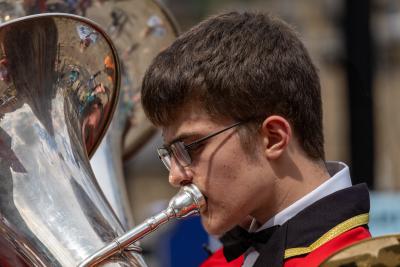
19-year-old Harry Brown was diagnosed with B Cell Acute Lymphoblastic Leukaemia when he was 17 years old. His Teenage Cancer Trust Youth Support Coordinator Padma organised a range of activities to help him through his treatment – including one particularly memorable music session.
He said: “I remember when I had some bad news about my treatment and was really struggling, Padma organised for some musicians to come into the ward. They brought instruments for people to play, and we all wrote a song together. Music has been a big part of my life, and my parents said that when I was taking part in this activity it was the first time, they had seen ‘the real Harry’ in many months smiling and having fun.”
Harry says his love of music ‘definitely’ helped him through his experience.
“We always had the radio on in my hospital room,” he says. “It not only provided company but broke the silence. For several years I have been a member of a youth brass band playing tuba and I remember being shown a recording of a concert they had done which greatly cheered me up as I lay in my hospital bed.”
‘Music is a meaningful and essential tool’
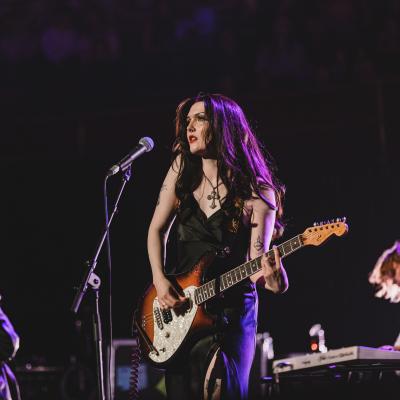
26-year-old Grace Kelly’s band Venus Grrls had already started to become successful when she was diagnosed with Acute Myeloid Leukaemia aged 24, and Grace said she was “gutted” for her bandmates when she was diagnosed.
“As a band, you rely on each other, and you know that you need to show up and commit for it to work,” she said. “I knew through no fault of my own that I wouldn’t be able to do that for a while. I worried that they were going to move on without me and it was hard for me to communicate that properly. They told me that they would wait until I got back to continue. I still felt like I was letting them down, but they reassured me as much as they could.
“We were all so young and blissfully ignorant. We were starting to get noticed and felt like the world was our oyster. It was hard to watch other people’s lives move on when mine had vividly stopped.”
Grace initially felt too exhausted by her treatment and lacking in confidence to think about making music, but with the support of Teenage Cancer Trust staff she started to channel her experiences into songwriting.
She says: I wrote the song Lidocaine while in my hospital bed. Lidocaine is used to numb you before a bone marrow biopsy, so I personified Lidocaine in the song. The song is about my cancer journey, feeling trapped and not being able to do the things I wanted to.
“I performed the song at our first gig when I was in remission, and it was really cathartic and healing. I was surrounded by my best friends and in a room of people who like our music.
“I wished that that version of me could go back to the version of me after I’d been diagnosed and reassure her that it would be ok.”
And in 2025, Grace’s band were invited to support James Arthur at the Royal Albert Hall as part of the Teenage Cancer Trust shows that year.
“Getting to play The Royal Albert Hall for Teenage Cancer Trust last year with my band was a moment I have so many times wished I could go back and show the past version of me,” she said. “The version of me on chemotherapy and unsure of what the future was going to look like. I know she would have been so proud if she had known what was to come. Cancer can be so alienating for young people, but music is a meaningful and essential tool to hold us up when we have nowhere else to turn.”