
The importance of clinical trials for young people with cancer
Following a new Teenage Cancer Trust report, Harry and Verity have shared how important clinical trials were to them during their cancer treatment. The report - which was developed after a year of consultation with young people the charity supports plus clinicians, academics, charities, and other experts - warns that too many young people aged 13–24 are missing out on the chance to take part in clinical trials, leaving them unable to access innovative new treatments that could increase their chances of survival.
- Published:
- Category:
- Policy and campaigns
Improve access to clinical trials to save young lives
A new Teenage Cancer Trust report published today warns that too many young people aged 13–24 are missing out on the chance to take part in clinical trials, leaving them unable to access innovative new treatments that could increase their chances of survival.
We’re now calling for parliamentarians, policymakers, the NHS, regulators, pharmaceutical industry, researchers and other key stakeholders in the field to all work together with young people with cancer to improve access to clinical trials.
Kate Collins, Chief Executive, Teenage Cancer Trust, said: “Cancer remains the largest disease-related killer of young people in the UK and every year 250 young people will have their lives cut tragically short, devastating families and communities across the UK.
“To save or lengthen young lives, access to clinical trials must improve. No young person should ever miss out on the opportunity to take part in a clinical trial simply because of their age, or because their specific needs are overlooked.
“We hope in particular that the voices and experiences of the young people in our report are heard, and welcome any opportunity to work with policymakers, the NHS, pharmaceutical industry and researchers to increase access to trials.”
Verity’s story
Verity Barker, 23, from Bristol was diagnosed aged 17 and has a rare cancer called DSRCT sarcoma. After hearing her cancer was incurable, she was offered a place on a clinical trial at the Royal Marsden Hospital in Surrey in December 2021. But taking part was sometimes difficult, not least because she faced a five and a half hour weekly round-trip to take part.
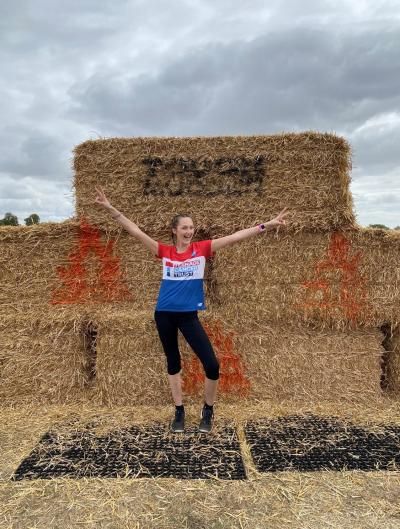
Verity said: “It felt like a miracle when I got a place on the trial.
“But to begin with it felt like science first, patient second, with several obstacles to get past, like the randomisation process determining which group you’d be in, which for me was very stressful.
“The lack of choice for location meant even on my bad days where I didn’t have the energy, I still needed to make the journey. At times I felt like a burden to my family who had to drive me which was an additional mental toll. My care team were great and managed to get the trial company to pay for a taxi door to door, but it would have been so much easier to have been able to take part in the trial closer to home.
“I spent two years on the trial, one of the longest participants, and for that period my cancer didn’t spread. Everyone deserves a chance to benefit from this sort of specialist treatment.
“I have met other young people with cancer who haven’t had the chance to take part in a trial, which I think is unfair.”
Unfortunately, just before Christmas last year Verity heard that the cancer had spread and came off the trial. Her team are now looking at other treatment options.
Verity adds: “Knowing that by taking part in a trial I’ve helped other people is important to me.
“And probably the best advice I’ve had is to stay alive as long as I can because by then more drugs might be available to treat it.”
Harry’s story
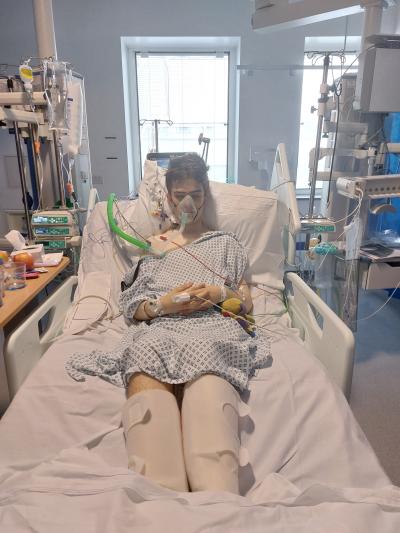
Harry was diagnosed with acute lymphoblastic leukaemia when he was 17 years old. He shares why he thinks all young people should have greater access to clinical trials.
“I was so glad to get onto this trial, as at the time, everything else had failed and we were running out of options. The trial gave me some hope. Although this was a paediatric trial, I managed to get the paperwork signed before I turned 18.
“When a clinical trial was mentioned my first thought was: ‘Am I going to be a guinea pig?’ But I quickly realised that this wasn’t the case. I was pleased to have the opportunity to receive the best possible treatment and assist patients in the future. I think that all young people should have greater access to clinical trials, particularly young adults where there is a gap in which trials are offered.
“Being enrolled on a phase 1 trial and being one of the first patients to receive a new treatment was both exciting and scary. I have yet to meet anyone else who has had it.
“The scars left by where IV drip and catheter lines have been and from high dose steroids will always serve as a visual reminder of my experience, however, as they fade, I find myself finding peace with them. This is a trial which I will be part of for the next 15 years.”