
Why I’m passionate about improving care for trans people with cancer

Jaz
I had just started a new job and begun seeing my partner when I was diagnosed with a rare form of ovarian cancer aged 22. After my experience of cancer treatment as a young trans person, I’m calling for a more inclusive approach to care.
Kindness matters more than we realise
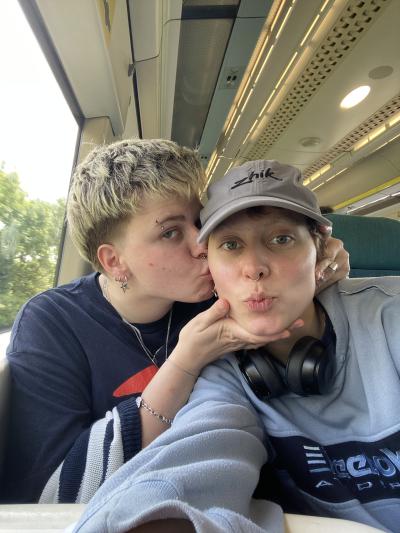
I got my diagnosis a month after I’d started seeing my partner Ellie. Having to tell someone you’ve just started dating that you have cancer was crazy, but it really felt like we were supposed to meet when we did. From day one, Ellie was so amazing and supportive, things would’ve been so much harder without her.
I was also just three weeks into my job as a teaching assistant at my old dance school. My boss was really supportive and considerate, but I told her that I wanted to keep things between us. I remember finding it really hard trying to do my job and having to pretend that everything was fine.
From the outside, I looked young and healthy but internally, I was really struggling. It’s important to remember that we never truly know what someone else might be going through. Everyone carries their own challenges, and so kindness matters more than we realise.
Having your gender identity set aside can really take a toll
As trans people, we spend so much time coming to terms with – but also building – our identities. It takes a lot of thought, energy, and strength to deconstruct our gender assigned at birth and rebuild a gender that better suits us and feels more right. Given the state of trans rights in this country, you can only imagine the courage this takes.
When being treated in a healthcare system that’s built for the dominant culture – white, heterosexual, cisgender people – this courage can falter. Bodies are read and treated based on cis-hetero norms. It can feel incredibly hard to assert your needs as a trans person in healthcare spaces; it’s hard enough asserting things like pronouns and a preferred name. The experience of having your gender identity set aside during cancer treatment can really take a toll on your mental health and sense of self.
This isn’t entirely the fault of the healthcare system or hard-working doctors and nurses. Rather, it’s a reflection of society at large. There’s so much work to be done to make life’s basic necessities, including healthcare, more inclusive of trans people.
I felt it was easier not to explain my pronouns

I felt like I had one foot in the cancer world and one foot in the queer world. Medical protocols simply do not exist to accommodate the bodies, identities, or desires of trans people.
Before cancer, I’d been considering hormone replacement therapy (a treatment which helps transgender people align their physical characteristics with their gender identity). But the lack of research around transitioning after cancer meant that I was advised it wasn’t worth the risk.
During my experience, the fertility team was the only department who made an active effort to use gender neutral terminology and address my identity. I saw so many different people, so I didn’t want to tell people my pronouns as I felt it was easier not to have to explain them each time. I just accepted that’s how it was, and it was unfortunate. Looking back, I feel like I disrespected myself for not doing that.
I’d also have benefited from being signposted to support from queer networks or communities, like OUTpatients (the UK’s only LGBTQIA+ cancer charity) and UK Cancer and Transition Service (UCATS) – a service that provides advice on accessing gender-affirming care during and after cancer). Queer people need dedicated spaces to share and talk through their experience of cancer.
Having cancer often leaves people feeling vulnerable, lost, isolated, weak, and distant from themselves. Whilst cancer isn’t something that patients, doctors, and nurses can always have control over, healthcare providers do have control over how they treat a patient, how they refer to a patient, and how they make a patient feel.
Yes, cancer will turn certain aspects of life upside down – but the aspects of identity that bring a sense of familiarity, strength, courage, joy, and a sense of self should be celebrated and encouraged in cancer care settings, rather than be set aside for later.
Nicola helped me share my voice and meet others my age who understand
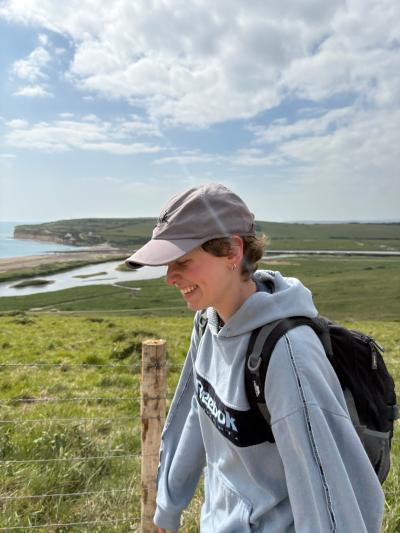
I met Nicola, Teenage Cancer Trust’s Youth Support Coordinator, at my first clinic appointment. I was meeting a lot of people at the hospital at that time, but I’m glad that I met Nicola. She’s really approachable and easy to talk to.
Nicola knew that I was passionate about advocacy for equitable and accessible healthcare, so she invited me to become a part of a panel which provides the NHS with feedback from patients. I joined because young trans people with cancer are a minority within a minority. I wanted to provide a voice that is often left out when discussing how to improve cancer care for young people in the UK.
I’ve also met people my sort of age through the events that Nicola runs. Everyone is really welcoming and it’s such a nice community to be a part of. A shared understanding of cancer is already there. These friendships feel like a really safe space to talk about anything cancer related. It’s important to have people in your life who can truly understand what you’ve been through.
This isn’t just a trans issue
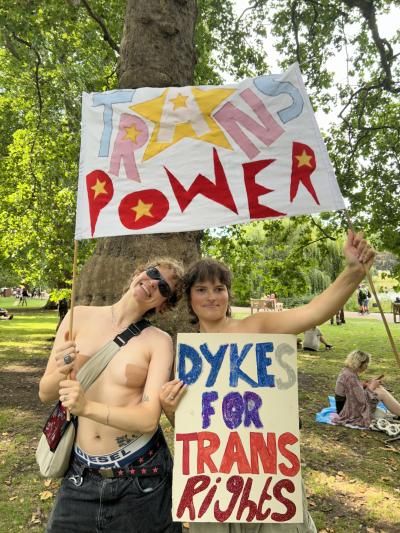
Ultimately, it’s important to question how healthcare and cancer care can provide tailored support for trans people – both during cancer and after cancer – to ensure that they are not made to feel othered, and instead, feel proud, supported, and strong during such a hard time.
And questioning how gender ideologies interact with cancer care is beneficial to everyone – this isn’t just a trans issue. For example, this conversation would also help destigmatise men with breast cancer, women who seek a double mastectomy as a preventative measure, and women who choose to live flat after breast cancer.
These examples show how the gender binary impacts and restricts us all. Binary cis-heteronormative ideas of gender are simply not compatible with healthcare.
Cancer throws a bomb into your life, and marginalised groups need access to specialised support services that can best understand the unique challenges they face.