
I had to use Google after my diagnosis appointment – health communication needs to improve
I was 16 when I found a lump on the left side of my neck after months of feeling unusually tired, congested and struggling to breathe properly. I had a feeling that it wouldn’t be good – but it was still a shock to be diagnosed with cancer.
Medical professionals should consider how to deliver news
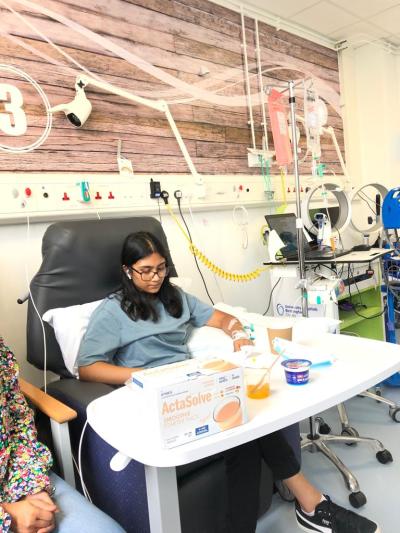
After a few different tests, I was told I had nasopharyngeal carcinoma (a type of cancer in the throat behind the nose).
My oncologist didn’t have a ‘poker face’ when I was diagnosed. The cancer was rare, especially in someone my age, so he seemed excited. I’m now studying medicine myself, so I understand the enthusiasm – but there needs to be more sensitivity.
In that moment, you just want to be reassured that it’s manageable and treatable. Personally, when I heard things like “rare” or “unique”, it made me think they hadn’t had much, or any experience dealing with anything like it, so it worried me more.
When I was diagnosed, the doctor’s tone was light-hearted and I understand that he was probably trying to make a serious situation more bearable, but I didn’t take it well. I would’ve preferred it to be more factual and sincere.
Medical professionals should consider how to deliver news and tailor their communication style based on the individual. If someone wants more scientific information, then it should be presented like that, and if they want a simpler version, they should get one.
Doctors seemed to speak more to my parents than to me
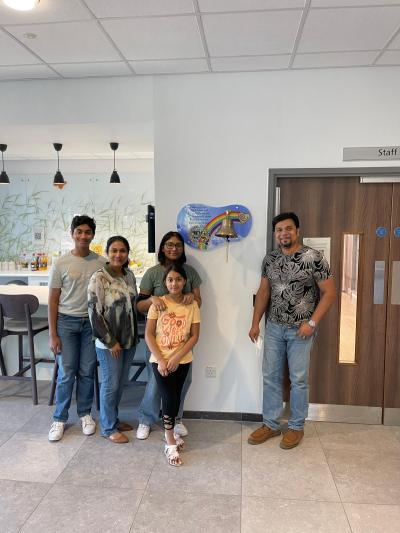
At first, I didn’t really have a chance to speak to the doctor for long, because the appointment was relatively short – but also because my parents were asking questions, so the doctor was responding to them. Afterwards, I had to Google things I didn’t understand.
My dad would go into appointments with a bunch of questions, and he’d take the lead in the conversation. I found that when doctors would speak, they seemed to look more at my parents than me. And I’d just be sat there trying to catch their eye like ‘I’m the one that’s sick here, talk to me.’
It felt a bit demeaning, because perhaps they were assuming that I wouldn’t understand because of my age. I think that parents being spoken to more than the patient is a much more common issue than people realise, and doctors should ask you first if you want to hear news yourself, or if you want to be addressed as a family.
There was one specialist nurse at The Christie hospital who became a go-to person for me. He noticed that my parents were quite overbearing and wouldn’t really let me speak for myself.
So sometimes he would take me aside under the pretence of taking nursing observations, just to ask me if I was okay and if there was anything specific I wanted to do with my treatment. My parents would dictate a lot of my decisions, but he gave me a chance to speak for myself, and I really appreciated that.
Chronic illness is sometimes taboo in my culture
A part of my cancer experience that made me feel different to those around me, or perhaps that others didn’t understand, was the cultural and religious aspect.
I’m Bangladeshi and Muslim, and I think my diagnosis pushed me a bit further from my religion. From a cultural standpoint, it’s overwhelming and a bit intimidating to handle cancer, as well as communication around it with family, as chronic illnesses are sometimes a bit taboo.
We have social gatherings with people like aunties and uncles, and a lot of the people around me shared the same mindset. The entire time I was ill, everyone was telling me that it was for the best and I’d be a stronger soldier. They’d say things like: ‘Because you’re having hardships now, you have something good for you in the future.’
It was a bit difficult to hear people saying that when I was thinking: ‘But what if I die tomorrow?’ It was just a bit contradictory, and it’s not exactly what you want to hear at that time. It was frustrating, especially as I couldn’t say anything or confront them about it. I would just think: ‘I don’t want to hear this’ the entire time.
My advice to others: speak up
If you have questions or if there’s something you want or need, I would 100 per cent say to speak up, because I was just so scared of saying the wrong thing or being seen in a bad light.
I’m someone that doesn’t really like being noticed, so I didn’t really want to take up space. I’d just go along with everything without really enforcing my own opinions or decisions, because I thought accommodating me would be more of a hassle to everyone taking care of me.
But at the end of the day, it’s your diagnosis, it’s your treatment, it’s about you getting better. No one is going to fault you for wanting certain thing or wanting to do things a certain way.