
Cancer conversations: young people deserve better conversations around cancer
Imagine you’re a teenager or young adult whose life has been turned upside down by a cancer diagnosis. Suddenly, you and your loved ones are thrust into a strange new world of hospital appointments, scans and treatment. You’re probably feeling really scared and struggling to process what’s happening to you.
Our Cancer Conversations campaign highlights some of the communication challenges faced by 13-24 year olds with cancer, their friends, loved ones and the professionals caring for them - from diagnosis, through treatment and into recovery.
You are viewing: Cancer conversations
Cancer conversations
For young people with cancer How to talk about cancer as a young person
Our Youth Advisory Group’s tips:
- Don’t be afraid to talk to someone with experience like Teenage Cancer Trust.
- If people say the wrong things or react badly it’s not your fault. I felt bad I was ‘making it hard for people by having cancer’ but that is NOT the case.
- Don’t be afraid to advocate for yourself. If you’re unsure of something you can ask questions and dig deeper.
- Don’t be afraid to ask to see your nurse/doctor alone. There may be certain things you want to discuss without family present. There are lots of different members of staff who you can find that trust with so don’t be afraid to speak to different members of your care team.
- Do what feels right for you. It’s completely normal to have no idea how you are feeling and not know how to communicate this to others. You should only communicate what you want to, and when it feels right for you. If you don’t want to have long conversations, it’s definitely fine to say, “I’m doing okay, but to be honest, I don’t want to talk about it.” This applies to both family and others who may be supporting you.
- Writing things down can help. Whether you show anyone else or keep it personal, it can be a good way to organise your thoughts.
- The most important thing is to ensure you do whatever is best for you, not for others. If you want to talk about your challenges, don’t hold back for other people’s feelings. If you don’t want to talk, don’t force yourself into uncomfortable situations under pressure from others.
More resources & guidance for young people with cancer
For healthcare professionals Communication tips for health professionals treating young people with cancer
Our Youth Advisory Group’s advice on what health professionals should say to someone with cancer
- Don’t fill a young person with a false sense of hope. At the start of my journey I was told “if you were going to get cancer, this is the one you want to get”. My cancer then ended up failing many treatments and it was emotionally devastating as I had expected a successful treatment path from what I was told.
- Tailor your approach. It’s different for everyone, but the best healthcare professionals can assess the personality and needs during a conversation and tailor their language, place and level.
- Find out more about the young person outside of the cancer world. Treatment takes over people’s entire lives and sometimes feels like it’s the only thing to talk about so bringing some light heartedness into it makes coming for treatment easier.
- Make time for the young person. See the young person alone as well as with their family (this was done for me and I massively appreciated it).
- Lay out everything clearly. As much as I didn’t want to hear it I now reflect and recognise it was a good thing.
Teenage Cancer Trust Nurse Holly on what to say to a teenager or young adult with cancer
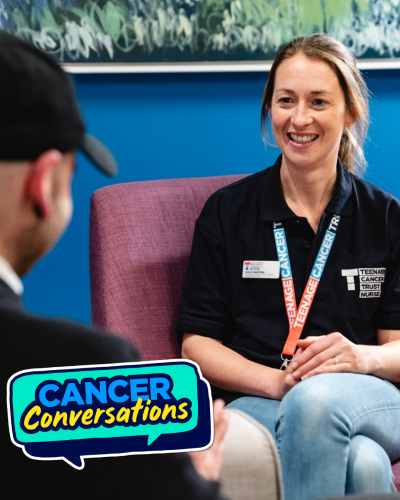
- Speak to the young person directly.
- Deliver news and talk in an age-appropriate way. Consider how you talk about certain things, what words you use, and do not overcomplicating things.
- Explain medical terms. To doctors, medical terms are everyday words but if you’re only 17 you may not necessarily know what they mean. Try to define the words you’re using and make it clear what it means.
- Involve young people in decision making. If young people haven’t made decisions or not been involved in them enough, then there’s a risk of disengagement. They’ll be less likely to comply. We haven’t had compliance issues for a long time, but it’s always a risk. When communication breaks down it prevents shared decisions.
- Continuity is important. Having the same nurses (especially for chemo), doctors, consultants and staff means building a relationship and communication style. It’s effective because if you’re seeing a familiar face, it immediately puts you at ease. Whereas if you see someone different every time, you don’t have that trust and therefore you’re starting from zero again. Our job is to often remind clinics and teams of how important that is wherever possible.
- It’s important to adapt communication for young people. Young people have different styles of communicating. Some prefer to have things written, some like to chat using WhatsApp. Not everyone in the NHS can do that, but being able to offer different communication styles, even just on the phone, can benefit massively so it’s on their terms and adapted to them.
- Ask and listen. Pause and listen to their answers and give plenty of time for that.
- Make time to ask questions. Ask and get an idea of what their personality is and like adapt according to what you get from them. E.g. how much information they want.
- Don’t be too scared to talk or upset them. Have open and honest communication.
- Communicate and signpost to support. If you are communicating something difficult, say it clearly and empathetically. Then make sure you’re offering the right support that comes with that information. But don’t hold it back because you think they can’t cope with it.
- Make sure they’ve had the opportunity to bring someone with them into the appointment so that they’ve got the right support with them. Or offer, them the opportunity to invite a relative or support person.
- Talk about normal things too. Every now it’s lovely when medical professionals ask things like: ‘What are you up to at college? What do you like to do at the weekend?’ It makes young people feel seen and cared about as a person and not just a patient.
- Ask them about things outside of cancer. Get to know them and you’ll learn how they would like to be communicated with. Then you can adapt. If young people come in and see that the waiting room is really busy, they think that they need to rush through their appointment and list of things to ask. But as soon as medical professionals open up those normal conversations and get to know them, it brings down barriers. It also makes young people feel like they’ve got time for them and they’ll suddenly forget the waiting room and the rush. It’s a relaxed conversation and they know they’ve got time.
- Make time for the right environment. Even if it takes effort to go and find. Even if it takes effort to go and find a room and getting that young person to go to the room, it’s betterfor honest conversations. So make time for this if possible and the resources are there.
- Try to come down to their level as much as possible, figuratively and literally. Don’t talk over young people, do go and sit down next to them and literally get on their level. Also provide age-appropriate care and language. Think about where you are having these conversations and who can hear. Can a young person talk about things honestly when they know that someone next to them can hear?
More resources and guidance for healthcare professionals
Professional development for healthcare professionals
CCLG: Communicating with teenagers and young adults with cancer guidelines
For friends and family Comforting words for someone with cancer
Advice from Teenage Cancer Trust Youth Support Coordinator Cathy
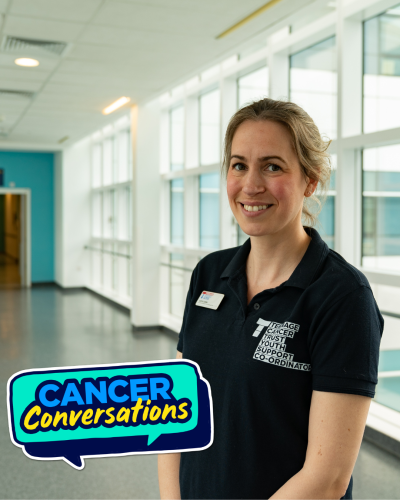
- Make sure you phrase your question well. A simple: ‘How are you feeling today?’ Is a good way to start a conversation.
- Read the room. To be mindful I always enter a room with a: ‘How are you doing? Well, that’s a stupid question, isn’t it? You’re here.’ It’s a very British very of asking how someone is, but it works and the person may then feel comfortable to open
sup whether they’re feeling good or bad. - Honesty is best. I always encourage people to be honest about how they are feeling at that moment, as many often automatically say ‘I’m alright’ as a response without really meaning it. I am honest and say that talking will not change anything, but it may make things feel a little lighter sharing it. This can be the same for a friend or relative to start conversations that may feel a little tricky at first.
- Let them lead. Whether it’s chatting about treatment or about a new film on Netflix, any conversation can be some light relief. Sometimes talking about things like TV open conversations as to how they’re feeling and can lead onto other topics.
- Don’t try to fix, just listen. Much of the time, people just want to talk.
- Careful with compliments. People may say things like ‘you look good today’ without thinking about the further impact that hiding behind a wig/makeup can have. Saying that, a well-placed compliment can go a long way – a smile on a young person’s face can be enough.
- Be mindful with what you’re saying. If a young person then has to take off their wig or make up, they may think ‘what about now?’ It can be difficult to recognise yourself in the mirror during treatment.
- Don’t underestimate the power of humour. Some people want this as it is their normal way of coping with challenging circumstances. Dark humour can sometimes diffuse a situation and break down barriers, but it is so important to read the room first. And this obviously may not work for everyone.
- Trust your gut instinct. If someone things feel a little different when you meet with a young person, then adjust your approach accordingly let them lead the conversation.
- Don’t always take things at face value. If someone says: ‘I’m doing okay.’ Sometimes that’s just an automatic response. If it’s appropriate, and you feel like you can, try and open a line of conversation that may offer some insight. Often, a good way to do this could by talking about other diversionary things like Netflix to open up.
More resources for friends, family and loved ones
Eden and Chessie's story No one is prepared to have that conversation, let alone when you're 14
At just 14 years old, Chessie was diagnosed with leukaemia and thrust into a strange new world full of hospital appointments, scans and treatment, turning her world and her sister’s completely upside down.
Our Ambassador, Eden Taylor-Draper, sits down with her younger sister, Chessie, to talk about the difficult conversations they faced following her diagnosis. They reflect on the support they gave each other and the help they received from Teenage Cancer Trust to navigate those conversations.
Jaz's story Why I’m passionate about improving care for trans people with cancer
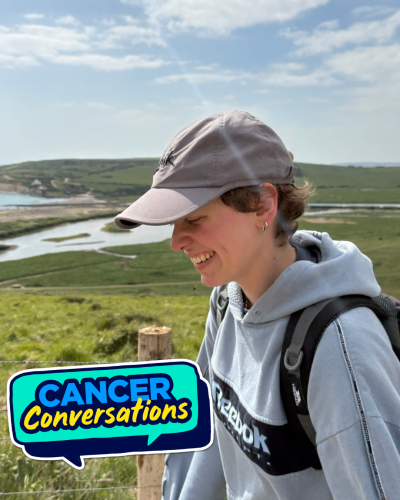
I felt like I had one foot in the cancer world and one foot in the queer world. Medical protocols simply do not exist to accommodate the bodies, identities, or desires of trans people.
Bodies are read and treated based on cis-hetero norms. It can feel incredibly hard to assert your needs as a trans person in healthcare spaces; it’s hard enough asserting things like pronouns and a preferred name. The experience of having your gender identity set aside during cancer treatment can really take a toll on your mental health and sense of self.
This isn’t entirely the fault of the healthcare system or hard-working doctors and nurses. Rather, it’s a reflection of society at large. There’s so much work to be done to make life’s basic necessities, including healthcare, more inclusive of trans people.
Tash's story I had to use Google after my diagnosis appointment – health communication needs to improve
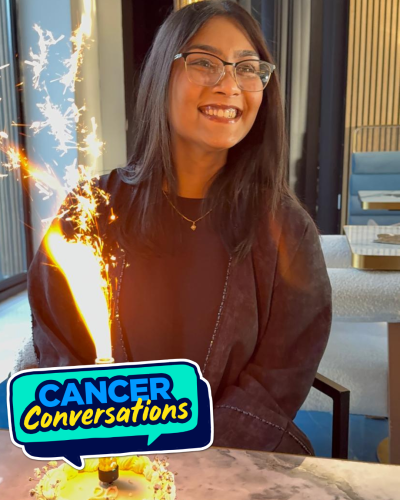
I was 16 when I was diagnosed with nasopharyngeal carcinoma (a type of cancer in the throat behind the nose).
My oncologist didn’t have a ‘poker face’ when I was diagnosed. The cancer was rare, especially in someone my age, so he seemed excited. I’m now studying medicine myself, so I understand the enthusiasm - but there needs to be more sensitivity.
In that moment, you just want to be reassured that it’s manageable and treatable. Personally, when I heard things like “rare” or “unique”, it made me think they hadn’t had much, or any experience dealing with anything like it, so it worried me more.
Ben's story I wanted my friends to support each other – my diagnosis affected them too
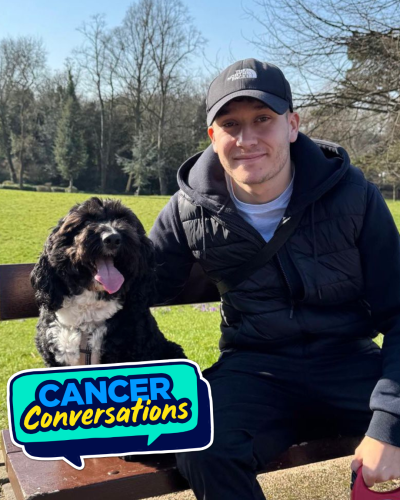
It was very difficult to know how to tell my friends that my tumour was more serious than was initially thought. When I did speak to them, it was hard, but they were so supportive. It was one of those things you can try and prepare for, but you just don’t know how it will go. They were all great.
Everyone was supporting me and worrying about me, but I was conscious that they weren’t worrying about each other. Everyone felt that they had to act like they were fine, which I didn’t want.
I wanted my friends to still talk to me about their problems and talk to me if my diagnosis affected them, too. I thought: ‘Just because this is happening to me, it doesn’t mean that it doesn’t affect other people.’
After my year of treatment, the scans have been good. I’ve been feeling healthy and more confident. I’d say the hardest thing is communicating that fact to other people.