
What is a stem cell transplant?

Find out more about stem cell transplants, what they’re used for, how they work and any side effects you might experience.
You are viewing: What's involved?
- Stem cell transplants are usually used to treat blood cancers like leukaemia, Hodgkin lymphoma and non-Hodgkin lymphoma
- They can also be used to treat solid tumours
- Having a stem cell transplant means your damaged blood cells will be replaced with healthy blood cells
What is a stem cell?
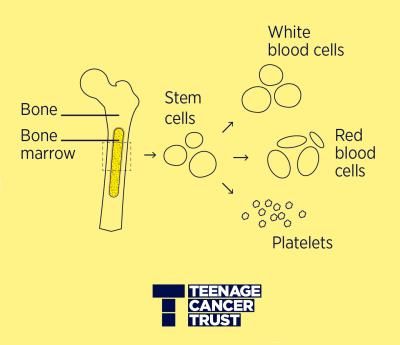
Stem cells are a special type of cell that develop in the bone marrow. Bone marrow is the soft, spongy stuff in your bones that creates blood cells.
Stem cells develop into different types of blood cells, which have different jobs in your body.
White blood cells: The cells in your blood that help to fight infection.
Red blood cells: The cells in your blood that contain haemoglobin, which transports oxygen around your body.
Platelets: The part of your blood that helps to stop bleeding by causing blood to clot.
We have a glossary that can help you understand the words we use.
What is a stem cell transplant?
A stem cell transplant replaces damaged stem cells with healthy stem cells.
Why would I need a stem cell transplant?
Certain types of cancer affect the blood. Leukaemia, Hodgkin lymphoma and non-Hodgkin lymphoma are all types of blood cancer and some of the most common types of cancer in young people.
Treatments like chemotherapy are used for these types of cancer. Chemotherapy can damage or destroy blood cells. Having a stem cell transplant can replace these cells.
A stem cell transplant is often used when other types of treatment (like chemotherapy or radiotherapy) haven’t worked. Having a stem cell transplant means your body will be able to start creating healthy blood cells again.
More info:
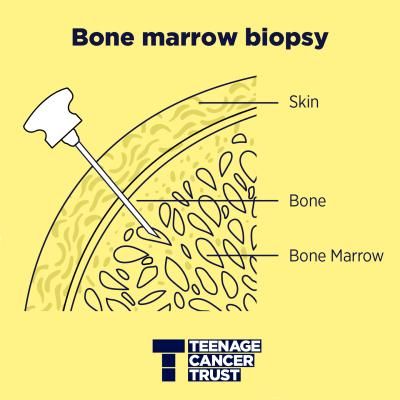
Bone marrow is the soft, spongy tissue that’s found inside some of your larger bones. During a bone marrow biopsy (sometimes also called a ‘bone marrow aspirate’), a sample of your bone marrow is taken and examined under a microscope.
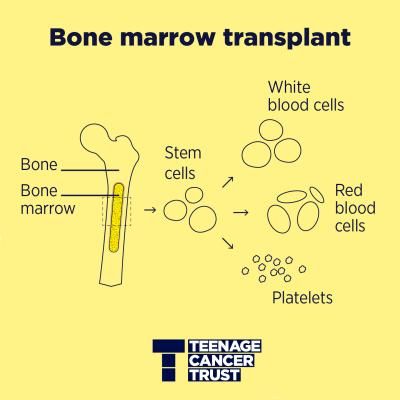
Bone marrow is the stuff inside your bones that makes blood cells. Stem cells are the cells made by your bone marrow, that develop into blood cells.
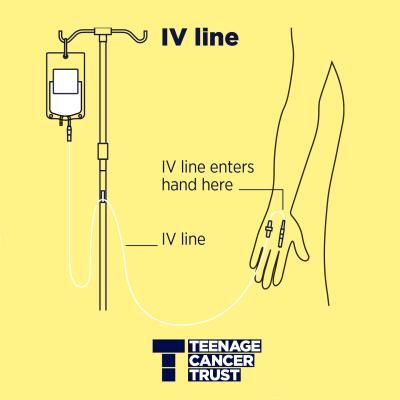
IV is short for intravenous, which means ‘into the veins’. IV lines are used to get medication and liquids delivered straight into your blood stream.
How do stem cell transplants work?
Stem cell transplants help rebuild your immune system. They do this by replacing the cells that have been destroyed by chemo.
Chemotherapy attacks and destroys cancer cells but it also attacks some healthy cells. Having a stem cell transplant means new stem cells can start rebuilding what’s been destroyed. Your new immune system is then able to recognise damaged cells and get rid of them.
Find out more about chemotherapy and other types of cancer treatment.
What is the difference between a stem cell transplant and bone marrow transplant?
Both types of transplant have the same end result – you will get new stem cells. The difference between stem cell and bone marrow transplants is just how the cells are collected from the donor. The transplant process is the same for both.
90% of the time stem cells are collected from your blood. The other 10% of the time stem cells are collected directly from your bone marrow.
Having this type of transplant means your damaged cells can be replaced with healthy cells.
To keep things simple we’ll only refer to them as ‘stem cell transplants’ on this page.
How are stem cells collected?
The stem cells you receive have to be a close match to yours. The stem cells might be taken from a close relative like a brother or sister – this is called an ‘allogenic’ transplant.
If you don’t have a match in your family then organisations like Anthony Nolan can support by searching their stem cell register to hopefully find a match.
Sometimes you might also have a transplant using your own healthy stem cells – this is called an ‘autologous’ transplant.
Stem cells are collected in two different ways, from blood or from bone marrow. While the process is different, the end result is the same.
What happens when stem cells are collected from blood?
Blood is taken from one arm, filtered through a machine to collect stem cells, and then pumped back into your other arm.
The stem cells that have been removed are then frozen before being transplanted later via a drip.
What happens when stem cells are collected from bone marrow?
Stem cells are collected from bone marrow under general anaesthetic. The donor won’t feel any pain during the procedure, but they will need some time to recover afterwards.
How are the stem cells transplanted?
You will usually have high-dose chemotherapy for five or six days – it can be more, or less. You might also have radiotherapy to kill any remaining cancer cells. Your stem cell transplant will happen after that.
Once you have had your high dose of chemotherapy, you will have the donated stem cells transplanted into you using a drip that goes directly into a vein – this is known as an intravenous (IV) line.
You can find out more about having a stem cell transplant on the Anthony Nolan website.
What happens after I’ve had a stem cell transplant?
Having a stem cell transplant temporarily lowers your blood cell levels and affects your immune system, which means you’re at a greater risk of picking up infections.
When you’re admitted into hospital for your chemotherapy and transplant, you’ll be moved to a single room for a few weeks. This is to keep you away from germs and reduce the chances of you getting an infection. This is sometimes called ‘protective isolation’.
This can feel boring. You can usually have visitors, but often only one or two a day and they will have to make sure they wash their hands before coming in, to avoid giving you any illnesses.
There are things you can do to make your room feel more like home, though – put up photos, get people to write messages for you in a visitor book, bring in things you usually have in your bedroom.
Find out more about protective isolation here.
What side effects might I experience?
Having a stem cell transplant can have side effects – but most of these are caused by the high-dose chemo, rather than the actual transplant. Potential side effects include:
Infections and immune system
The chemotherapy reduces your white blood cell count and immune system, increasing the risk of infection. Your nurses will let you know about food to avoid or be careful with. Your sheets will be changed and your room will be cleaned daily to reduce the risk of infection. And if your visitors aren’t feeling well, they’ll need to stay away until they feel better to reduce the chance of you getting ill.
Anaemia
Anaemia is caused by a drop in red blood cells and it can leave you feeling wiped out – short of energy and short of breath. Your nurse will keep an eye on your red cell count. If it’s low you might be given a blood transfusion which should give you an instant boost. Some people do react to blood transfusions, though, so if you feel hot, shivery or itchy while it’s happening, let your nurse know.
Bleeding
High-dose chemotherapy kills more of the platelets that help your blood to clot, so you might notice bleeding or bruising when you’re not expecting it. If you see blood when you go to the loo, or if you have a nosebleed, bleeding gums, bruises or red spots on your skin, let your nurses know. You might need to have a platelet transfusion, given to you through a drip.
Infertility
High-dose chemotherapy can impact your fertility (ability to have children). While having children might be the last thing on your mind right now, it’s still a good idea to chat through your options with doctors before starting treatment.
You might be able to have your sperm or eggs stored so they can be used in the future. It might feel a bit uncomfortable talking to your doctor about this kind of thing, but they have conversations like this all the time and should be ready to answer any questions you have.
Find out more about fertility, egg freezing and sperm banking.
Graft versus host disease
If you have a transplant from another person, immune cells from the donor cells you’ve been given can sometimes attack your own cells – this is known as graft versus host disease (GvHD). The new cells get confused, think your cells are infected cells, and attack them.
GvHD can start soon after a transplant or several months later. If it starts within three months, symptoms can include red spots on your skin, a high temperature, watery diarrhoea, stomach cramps and jaundice (where your skin, or the white parts of your eyes turn yellow).
If it starts after three months, you might get an itchy rash, skin that feels hard, a dry mouth or dry eyes, or hair falling out. Chronic GvHD can affect any of your organs, so let your doctors know if you have these or any other symptoms.
You can find out more about GvHD on the Anthony Nolan website.
Other chemotherapy effects
You can read about common chemotherapy side effects in our chemotherapy section. But some of the main ones include diarrhoea, sickness, having a sore mouth, not wanting to eat or drink, and feeling really tired. They can be pretty unpleasant – but should start to pass once the levels of blood cells in your blood get closer to normal.
Questions to ask
Never be afraid to ask questions about your cancer. And if you don’t understand the answers you get, you can always ask your care team to explain it again, or in a different way until you do understand.
If your doctor recommends a transplant, you might like to ask:
- Why is a transplant is being recommended?
- Will I need chemotherapy and radiotherapy?
- What side effects might I have? And how can I reduce them?
- How effective is the transplant likely to be?
- How long will I be in hospital?
- Will the transplant affect my fertility?
- Are there any other treatments might work?
You can find lots more information about stem cell transplants on the Anthony Nolan website.
You can download our ‘Common questions about stem cell transplants’ factsheet here:
What support is available to me if I have a stem cell transplant?
Anthony Nolan
We’d like to thank Anthony Nolan for their support in helping us develop this information.
Anthony Nolan is the charity that unites people and science to match stem cell donors to those with blood cancers and blood disorders in need of lifesaving transplants and treatments.
We support patients and families in many ways:
• Find extensive information on stem cell transplant, including the search for a donor, the transplant process and recovery here.
• Find an online forum where our community of patients share experiences of treatment and recovery here.
• There’s a helpline to help answer any questions you may have, more information here.
• You can find more information on CAR T-cell therapy here.
This page was reviewed in April 2025, it will be reviewed again in April 2028.
PIF TICK accredited information
The Patient Information Forum is the UK membership organisation and network for people working in health information and support. The PIF TICK is the UK-wide Quality Mark for Health Information.